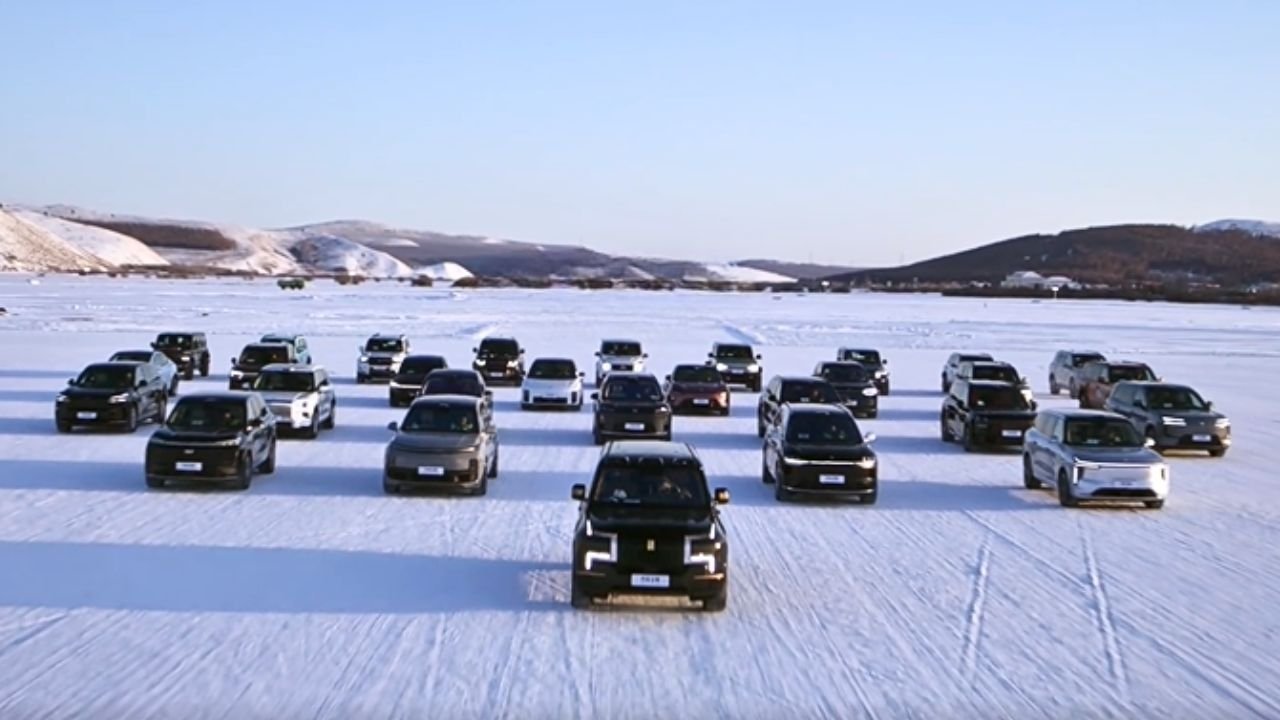
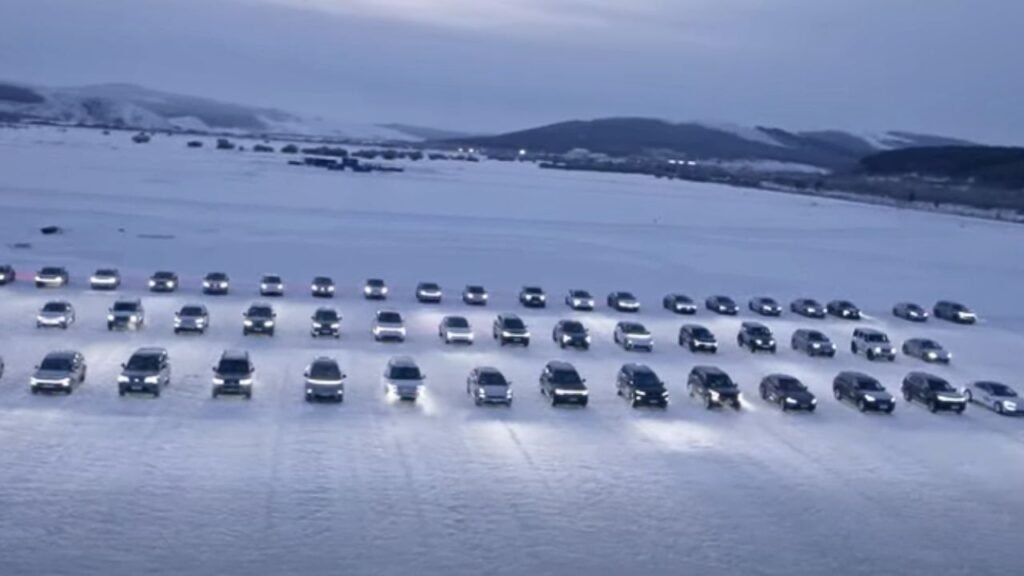
Deep inside Mongolia, China’s leading automotive platform, Autohome, organized a monumental auto testing to determine the best electric vehicles in snow. This ambitious undertaking involved 67 EVs, ranging from budget-friendly hatchbacks to luxurious SUVs, and earned a Guinness World Record for the largest-scale field winter car test ever conducted.
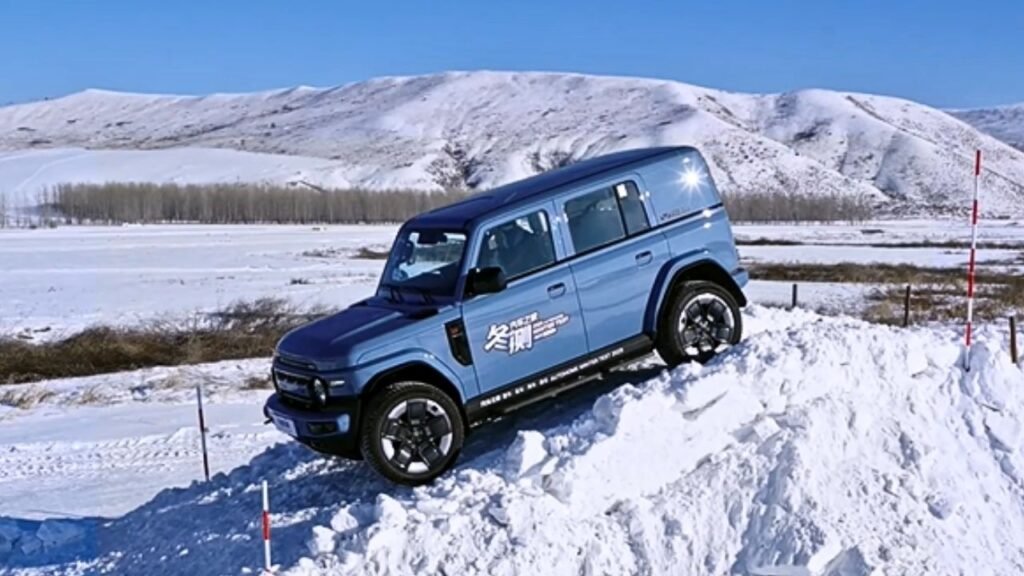
Conducted in Yakeshi, where temperatures ranged between -10°C and -30°C (14°F to -22°F), the test simulated real-world winter conditions to evaluate how EVs perform in extreme cold.
With vehicle prices ranging from around 60,000 yuan ($8,200) to over 2 million yuan ($273,000), the event highlighted the diversity of China’s booming EV market, featuring brands like BYD, Xpeng, Zeekr, Tesla, Mercedes, Geely, Avatr, Xiaomi, and Li Auto.
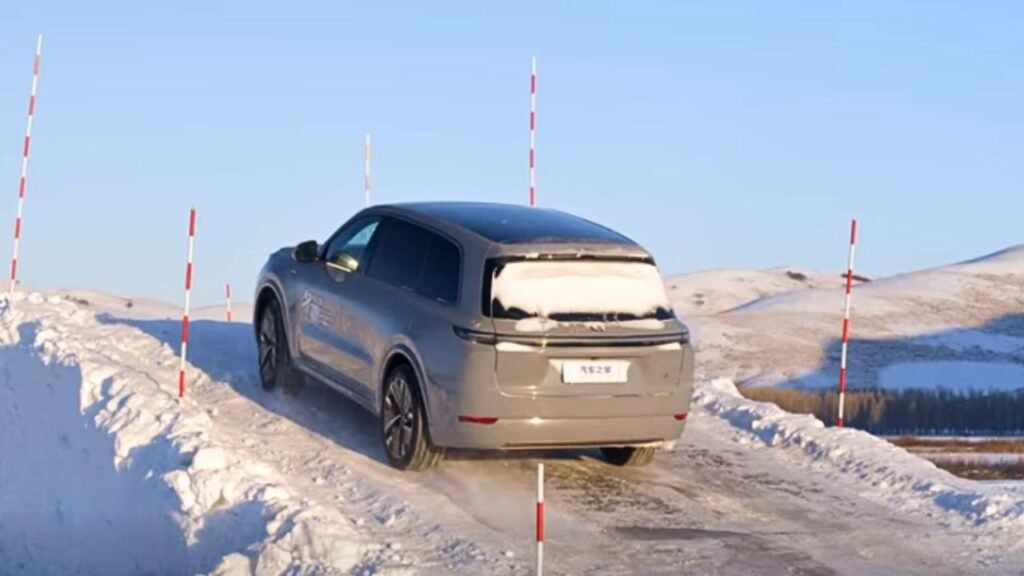
The Testing Scenarios: Seven Extreme Challenges to Determine the Best Electric Vehicles in Snow
Autohome had designed seven rigorous real-world scenarios to assess a comprehensive snowy winter performance for these vehicles. These included:
- Winter Range Test—Vehicles were driven until their batteries were fully depleted, measuring the actual distance achieved compared to their claimed CLTC (China Light-Duty Vehicle Test Cycle) range.
- Energy Efficiency—The power consumed in kWh per 100 km (62 miles) under cold conditions.
- Fast Charging—Time taken to charge from 30% to 80% battery capacity in sub-zero temperatures.
- Acceleration—Straight-line speed tests on snow and ice.
- Cabin Heating Efficiency—How quickly and effectively the interior warmed up.
- Autonomous Emergency Braking (AEB)—Performance of safety systems in icy conditions.
- Off-Road Capabilities—Handling in challenging terrains like snow-covered hills and obstacles.
The focus was primarily on testing the range, efficiency, and charging time, which provided an eye-opening insight into the cold-weather behavior of electric vehicles. These are the main concerns for buyers facing cold weather.
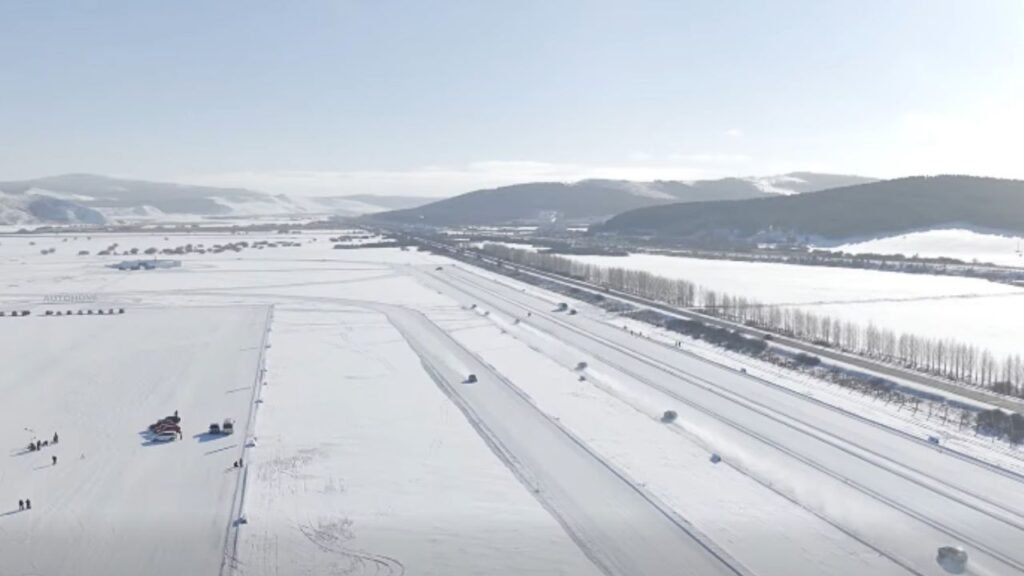
Key Results: Range Test
This metric compared the actual driven distance on a full charge to the manufacturer’s claimed CLTC range, with higher percentages indicating better cold-weather resilience. Top contenders, primarily all-wheel-drive (AWD) models, performed brightly.
| Models | Drive Type | Range Achieved | |
| 1 | Xpeng P7 | AWD | 53.9% |
| 2 | BYD – Yangwang U7 | AWD | 51.8% |
| 3 | Geely – Zeekr 001 | AWD | 49.6% |
| 1 | BYD – Leopard 3 | AWD | 44.9% |
| 2 | Huawei Seres – AITO M7 | 4WD | 44.4% |
| 3 | Xiaomi YU7 | AWD | 42.5% |
The Xpeng P7 was the best performing vehicle in extreme cold conditions with the BYD – Leopard Titanium 3 being the best among SUVs. In contrast, the Tesla Model Y (AWD) managed only 35.2%, ranking 31st, while the Li Auto i8 (AWD) trailed at 34.8%—one of the lowest among battery electric vehicles (BEVs). Plug-in hybrids (PHEVs) and extended-range EVs (EREVs) were also tested, though their results focused more on electric-only modes.
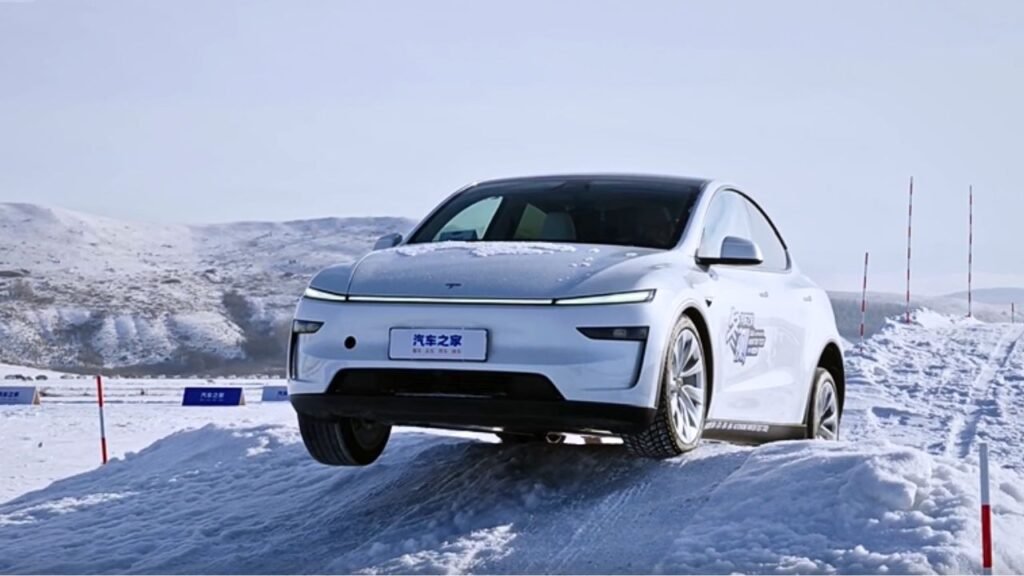
Key Results: Efficiency Test
Measured in kWh consumed per 100 km drive (lower is better), this test naturally favored smaller, lighter vehicles.
| Model | Drive Type | Consumption kWh | |
| 1 | BYD Seagull & Geely Star Wish | FWD | 23.5 |
| 2 | BYD Seal 6 | RWD | 24.6 |
| 3 | Wuling Bingo & Tesla Model 3 | FWD | 24.9 |
| 1 | BYD Leopard 3 & Xiaomi YU7 | AWD | 33.7 |
| 2 | Tesla Model Y | 4WD | 34.9 |
| 3 | Huawei Seres – AITO M7 | 4WD | 35.7 |
As expected, smaller car consumed much less than bigger counterparts. Large SUVs like the Xiaomi YU7 (33.7 kWh, 20th place) and Tesla Model Y (34.9 kWh, 21st place) consumed more, illustrating the efficiency trade-offs in bigger vehicles.
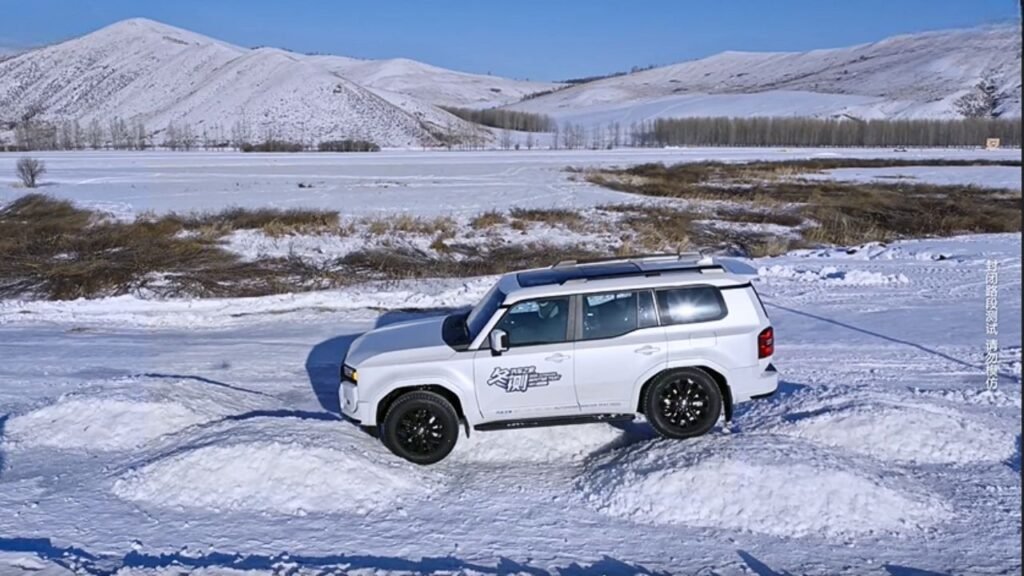
Key Results: Battery Charging Time
Charging in extreme cold is notoriously slow due to battery preconditioning needs, but some models excelled. The time required to charge the battery from 30% to 80% using a 120KW charger was as follows:
| Model | Drive Type | Time (minutes) | |
| 1 | Changan Qiyuan A06 | RWD | 16 |
| 2 | BAIC Arcfox T1 | FWD | 17 |
| 3 | Leapmotor B01 | RWD | 21 |
| 1 | Nio L90 | AWD | 25 |
| 2 | GAC Toyota 3X & iCAR V23 | AWD | 26 |
| 3 | Huawei Seres – AITO M7 & M8 | AWD | 27 |
The Xiaomi YU7 took 31 minutes (39th), BYD Seagull took 34 minutes (43rd), and the Tesla Model Y required 35 minutes (44th), highlighting slower performance even from some of the established players.
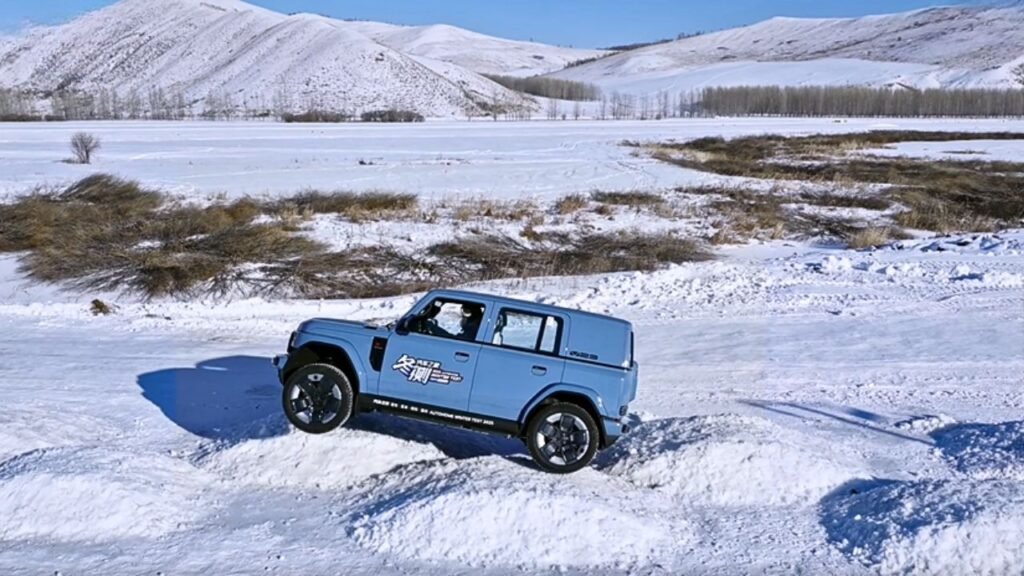
Key Results: Acceleration 0-100 km/h
The test highlighted the time taken for a vehicle to accelerate from 0 to 100 km/h (0-62 mph).
| Model | Drive Type | Time 0-100 (seconds) | |
| 1 | Xiaomi YU7 | AWD | 6.57 |
| 2 | Geely – Zeekr 9X | AWD | 6.66 |
| 3 | Geely – Zeekr 001 | AWD | 6.78 |
| 4 | SAIC – IM Motors LS9 | AWD | 6.84 |
| 5 | Li Auto Li i8 | AWD | 6.92 |
The Xiaomi YU7 achieved the best acceleration time of 6.57 seconds, the best vehicle in snow, followed by the Zeekr 9X and the Zeekr 001. The Tesla Model 3 came in 8th with 7.34 sec and the Tesla Model Y at 14th with 7.74 sec.
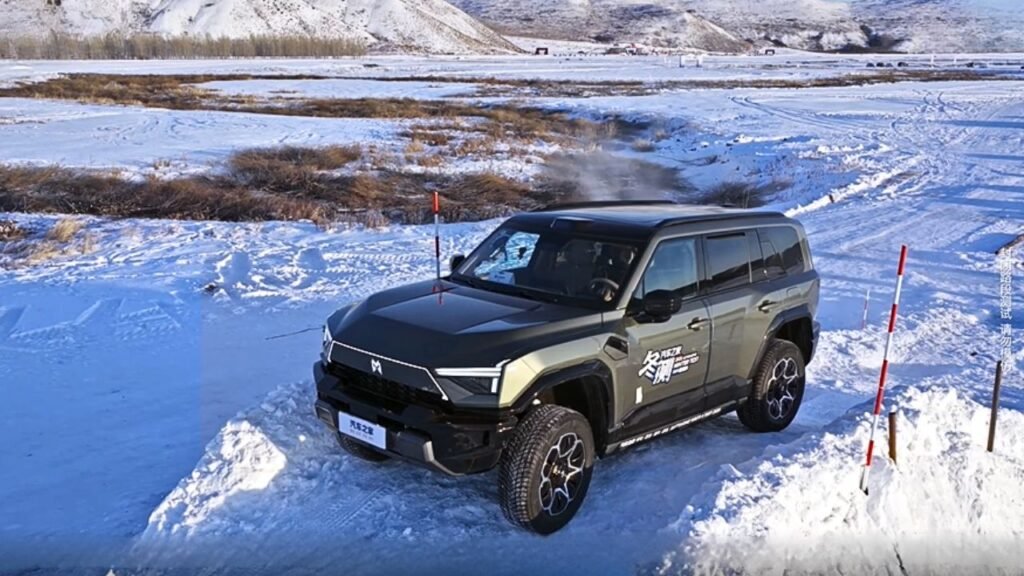
Key Results: Other Tests
In the test for top speed that a vehicle is able to achieve in a 400-meter dash, the Zeekr 001 managed 183.1 km/h, followed by the Xiaomi YU7 at 172.7 km/h, the Zeekr 9X at 172.4 km/h, and the Xpeng P7 at 170.6 km/h. All being AWD vehicles. As expected, at the bottom were single-motor RWD and FWD models.
In the braking distance taken to stop from 100 km/h, the Huawei Aito M9 did the best with 79.38 meters, followed by the Lynk & Co 900, SAIC–IM Motors LS9, Zeekr 9X, and the Xiaomi YU7. The Tesla Model 3 stood at 12th (87.33 m) and the Model Y at a distant 46th (101.08 m).
In the collision avoidance test, the Changan Avatr 06 had the best performance, followed by the Voyah Taishan, SAIC Shangjie H5, Huawei AITO M7/M8/M9, Zeekr 001/9X, and the Xpeng P7. Rest no one passed the test.
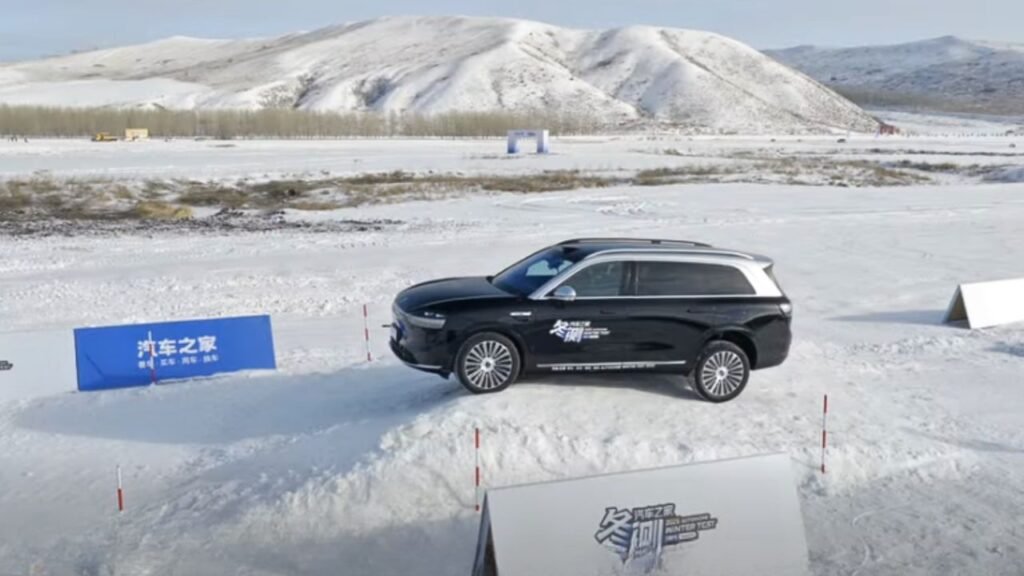
In the emergency lane change test, the Mercedes-Benz CLA had the best performance, followed by the GAC Toyota 3X, the Chery Fengyun A9L, the BYD Seal 06, and the BAIC Jihu T1.
And finally, in the off-road performance capability test, the Mercedes G-Wagon was the best vehicle in snow, followed by the Chery iCAR V23, Geely Zeekr 9X, Dongfeng Voyah Taishan, and the Nio L90.
Industry Implication of Testing for the Best Electric Vehicles in Snow
One of the most notable surprises was the strong showing by Chinese brands like Xpeng and Huawei AITO, often outperforming global giants like Tesla and Mercedes. The Xpeng P7 in the range test and the Changan Qiyuan A06 in the lightning-fast charging test stood out as unexpected winners, potentially signaling advancements in their battery thermal management technology.
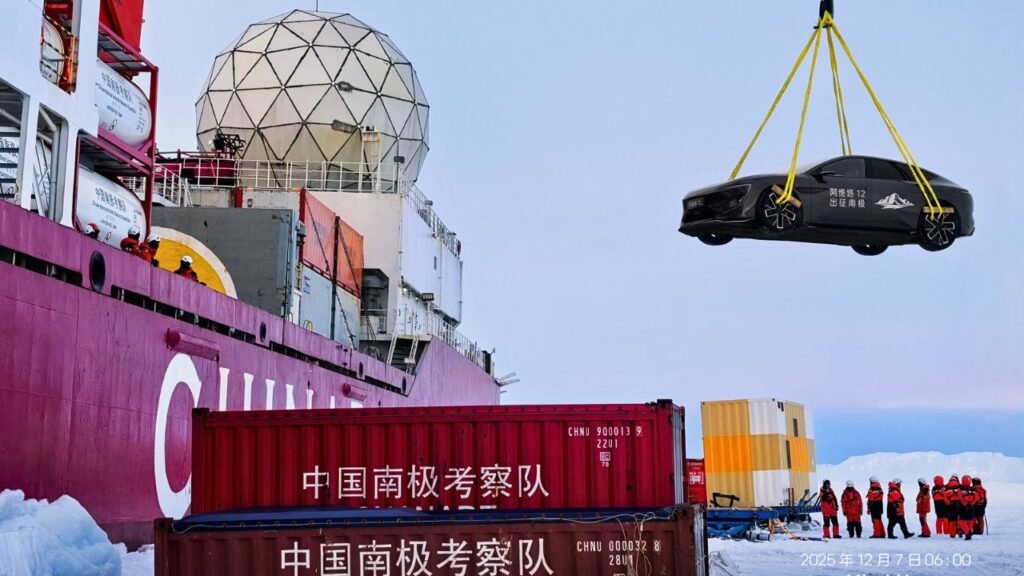
As expected, compact EVs proved exceptionally efficient. This test not only provides transparent, real-world benchmarks but also underscores China’s rapid EV innovation. As global adoption grows, such evaluations could influence design priorities, emphasizing cold-weather optimization. Changan has even gone a step further by testing its Avatr 12 in Antartica. And for consumers, it’s a reminder that official range figures often halve in winter.
Autohome’s event sets a new standard for rigorous, large-scale real-world testing, potentially inspiring similar initiatives worldwide to determine the best vehicles in snow. For detailed results, checkout Autohome’s website.